1Department of Laboratory Medicine, Seoul National University Hospital, Seoul, Korea
2Department of Laboratory Medicine, Seoul National University College of Medicine, Seoul, Korea
Correspondence to Jae Hyeon Park, E-mail: bjack9@snu.ac.kr; Moon-Woo Seong, E-mail: mwseong@snu.ac.kr
Ann Clin Microbiol 2026;29(1):5. https://doi.org/10.5145/ACM.2026.29.1.5
Received on 12 January 2026, Revised on 27 February 2026, Accepted on 11 March 2026, Published on 20 March 2026.
Copyright © Korean Society of Clinical Microbiology.
This is an Open Access article which is freely available under the Creative Commons Attribution-NonCommercial-NoDerivatives 4.0 International License (CC BY-NC-ND) (https://creativecommons.org/licenses/by-nc-nd/4.0/).
Background: The accurate laboratory-based detection of respiratory viruses, including severe acute respiratory syndrome coronavirus 2 (SARS-CoV-2), is essential for effective patient management and infection control in the post–coronavirus disease 2019 era. In this study, the performance of the PowerChek Respiratory Virus Panels 1–4 assay (Kogene Biotech) in detecting non-SARS-CoV-2 respiratory viruses and SARS-CoV-2 was compared with those of two established commercial assays.
Methods: Residual clinical respiratory specimens collected between December 2023 and February 2024 were retested using the PowerChek assay. Of the 129 specimens retested, 80 had tested positive for 14 non-SARS-CoV-2 respiratory virus targets in the Allplex Respiratory Panels 1–3 assay (Seegene) and 49 had been tested using the Alinity m SARS-CoV-2 assay (Abbott; 20 positive and 29 negative for SARS-CoV-2). Agreement, Cohen’s kappa, and discordant results were assessed.
Results: For the 14 non-SARS-CoV-2 respiratory virus targets, the virus-specific overall percent agreement (OPA) ranged from 95.0% to 100%, the positive percent agreement (PPA) ranged from 66.7% to 100%, and the negative percent agreement (NPA) ranged from 96.0% to 100%, with kappa values of 0.64–1.00. Lower agreements were observed for human coronavirus OC43 and influenza A virus. For SARS-CoV-2 detection, the OPA was 98.0% (PPA, 95.0%; NPA, 100%; kappa, 0.96).
Conclusion: The detection performance of the PowerChek assay was comparable to those of the established assays for most respiratory virus targets, with lower agreement observed for some targets. These features support its practical utility for the routine multiplex molecular detection of respiratory viruses, including SARS-CoV-2.
Respiratory tract infections, COVID-19, Multiplex polymerase chain reaction, Sensitivity and specificity
Acute respiratory infections caused by viruses often lead to severe symptoms and hospitalization, particularly in children, older adults, and immunocompromised individuals [1,2]. The rapid and accurate identification of respiratory viruses is essential for ensuring effective patient management and infection control. In this regard, multiplex real-time polymerase chain reaction (PCR) assays enable the simultaneous detection of multiple respiratory pathogens in a single test, thereby providing an efficient approach for diagnosing respiratory viruses [3–5].
In the wake of the coronavirus disease 2019 (COVID-19) pandemic, the traditional seasonality of many respiratory viruses has been disrupted and unpredictable circulation patterns have been increasingly reported [6–10]. This loss of predictable seasonality makes it difficult for clinicians to infer causative pathogens solely on the basis of clinical presentation. Additionally, the clinical manifestations of severe acute respiratory syndrome coronavirus 2 (SARS-CoV-2) infection overlap with those of other respiratory viruses, and co-infection with SARS-CoV-2 has been reported more frequently than previously described, indicating that the detection of a single respiratory virus does not exclude a concurrent SARS-CoV-2 infection [11,12]. Recent evidence suggests that SARS-CoV-2 co-infection with other respiratory viruses may be associated with increased mortality, underscoring the importance of comprehensive molecular testing to identify the microbial etiology of infections for effective patient management and infection control [13].
Therefore, multiplex real-time PCR assays capable of simultaneously detecting multiple respiratory viruses, including SARS-CoV-2, have become increasingly important for comprehensive respiratory virus diagnosis. In Korea, several commercially available assays target a limited set of viruses, whereas broader syndromic panels cover a wider range of common respiratory viruses in addition to SARS-CoV-2. The PowerChek Respiratory Virus Panels 1–4 Kit (Kogene Biotech) provides broad coverage of common respiratory viruses across multiple multiplex reactions/panels and is designed for high-throughput batch testing in centralized laboratory settings.
PowerChek, which is a multiplex real-time reverse transcription PCR (rRT-PCR) assay, comprises four reaction tubes (panels) that are designed to detect 16 respiratory viruses (including SARS-CoV-2) by recognizing 17 target genes. Panel 1 detects influenza A virus (INF A), influenza B virus (INF B), and SARS-CoV-2 and targets the nucleocapsid (N) and open reading frame 1ab (ORF1ab) genes; panel 2 detects enterovirus/human rhinovirus (EV/HRV) and human coronaviruses (HCoVs) OC43, 229E, and NL63; panel 3 detects human parainfluenza virus (HPIV) types 1, 2, 3, and 4; and panel 4 detects adenovirus (ADV), human metapneumovirus (MPV), respiratory syncytial virus (RSV), and human bocavirus (BoV) (Supplementary Table 1, 2).
The aim of this study was to compare the performance of the PowerChek assay with those of two widely used commercial assays in detecting respiratory viruses and SARS-CoV-2 in specimens collected during the winter season of 2023–2024. Although the PowerChek assay has previously been evaluated using specimens collected over extended periods, including November 2018 to December 2023 [14] and throughout 2023–2024 [15], those studies reflect broader epidemiological contexts than that reflected by the winter season cohort of the present study.
This was a retrospective comparator-based study using residual clinical respiratory specimens rather than a diagnostic accuracy study against an independent reference standard. The performance of the PowerChek Respiratory Virus Panels 1–4 assay was compared with those of the Allplex Respiratory Panel (for 14 respiratory virus targets: ADV, BoV, EV/HRV, HCoV-229E, HCoV-NL63, HCoV-OC43, HPIV-1–4, INF A, INF B, MPV, and RSV) and Alinity m SARS-CoV-2 assays. Residual specimens were selected to ensure an adequate representation of viral targets for virus-specific agreement analyses. Additional discrepancy testing was not performed owing to the limited residual specimen volume available.
In total, 129 clinical respiratory specimens (sputum, nasopharyngeal and nasal swabs, tracheal aspirates, and bronchoalveolar lavage fluid) were obtained from patients with symptoms of respiratory tract infection between December 2023 and February 2024. Among these specimens, 80 that were previously tested to be positive in the Allplex assay were selected on the basis of viral target distribution. Additionally, 49 specimens that had been tested using the Alinity m SARS-CoV-2 assay (20 positive and 29 negative samples) were included. For retesting of the Allplex-positive specimens, we used nucleic acids that had already been extracted during routine testing with the MagNA Pure 96 system (Roche Diagnostics) and were stored at −70°C. For retesting of the Alinity-tested specimens, nucleic acids were newly extracted from the residual specimens using the MagNA Pure 96 system because none had been stored after the initial testing.
The PowerChek assay includes a pre-dispensed strip containing a PCR mixture, a probe and primer mixture, and an enzyme mixture. rRT-PCR was performed in a total volume of 20 µL (15 µL PCR premix and 5 µL template) using the PowerAmp96 Dx Real-Time PCR system (Kogene Biotech). Thermal cycling was performed according to the manufacturer’s instructions. Each run included a manufacturer-provided positive control and a negative control containing sterile DNase- and RNase-free water. A cycle threshold (Ct) cutoff value of 34 was used to interpret the results. For the detection of SARS-CoV-2, a sample was considered positive when both targets (i.e., the N and ORF1ab genes) showed Ct values of less than 34 and inconclusive when only one target showed this Ct criterion.
The Allplex Respiratory Panels 1–3 rRT-PCR assay (Allplex) was performed by adding 8 μL of extracted nucleic acid to a mixture consisting of 17 μL of one-step rRT-PCR premix and 10 μL of exogenous internal control. The one-step rRT-PCR was performed on the CFX96 Real-Time PCR system (Bio-Rad). Thermal cycling and fluorescence acquisition were performed according to the manufacturer’s instructions. The results were interpreted as positive if a well-defined exponential amplification curve crossed the threshold at a Ct value of less than 42.
The Alinity m SARS-CoV-2 assay (Alinity; Abbott), which is a qualitative rRT-PCR assay, was performed on a fully automated Alinity m system that carries out specimen–reagent mixing, nucleic acid extraction, and rRT-PCR amplification with a total sample volume of 500 µL. rRT-PCR amplification was performed according to the manufacturer’s instructions and the results were classified according to the manufacturer’s criteria (positive if the amplification curve crosses the threshold at Ct ≤ 36, inconclusive if 36 < Ct ≤ 42, and negative if Ct > 42).
Statistical analyses were performed using Python software (version 3.12). The agreement between the PowerChek assay and each comparative assay was evaluated by calculating the positive percent agreement (PPA), negative percent agreement (NPA), overall percent agreement (OPA), and Cohen’s kappa coefficient. For the agreement analyses, inconclusive SARS-CoV-2 results were classified as negative. Exact binomial 95% confidence intervals for PPA and NPA were calculated using the Clopper–Pearson method, whereas 95% confidence intervals for Cohen’s kappa were estimated using bootstrap resampling (5,000 iterations).
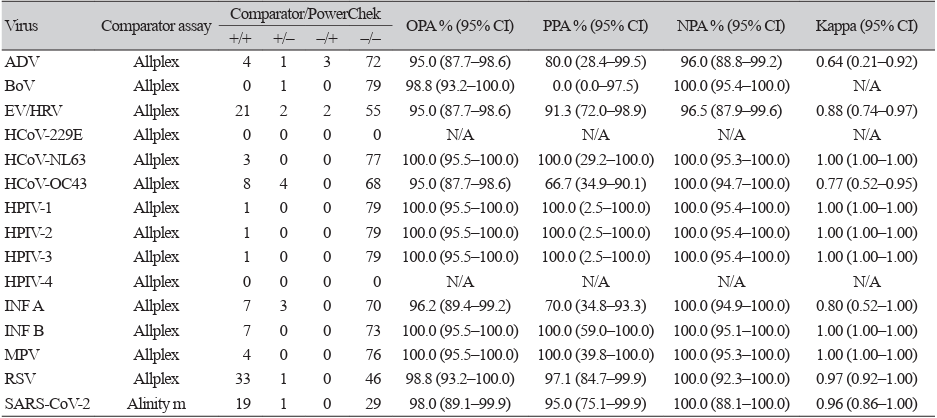
Eighty respiratory specimens that had previously tested positive in the Allplex assay were retested using the PowerChek assay. The specimens were obtained from patients with a median age of 7 years (range, 0–84 years), 49 (61.3%) of whom were males and 31 (38.8%) were females. Most specimens were submitted from the pediatric emergency department (42.5%), with the other samples being from general wards and intensive care units. The specimen types included 39 sputum samples (48.8%), 19 tracheal aspirates (23.8%), 16 nasal swabs (20.0%), and 6 bronchoalveolar lavage samples (7.5%). The PowerChek assay detected one or more respiratory viruses in 77 of the 80 specimens. Specifically, 59 specimens tested positive for a single virus, 15 for two viruses, 2 for three viruses, and 1 for four viruses in the PowerChek assay. At the specimen level, the OPA between the PowerChek and Allplex assays for detecting common respiratory viruses was 96.3%. Because these specimens were all Allplex positive, whether the OPA equaled the PPA and NPA could not be estimated. At the virus-specific level, the PPAs between the two assays ranged from 66.7% to 100%, and the NPAs ranged from 96.0% to 100%. Cohen’s kappa coefficients ranged from 0.64 to 1.00 (Table 1). High concordance was observed for several clinically important respiratory viruses, including INF B, MPV, and RSV, all of which exhibited PPAs of 97% or higher with Cohen’s kappa values approaching or equal to 1.00. By contrast, only a limited number of specimens tested were positive for low-prevalence targets (BoV and certain HPIV subtypes) and none were positive for HCoV-229E or HPIV-4.
Table 1. Agreement of the PowerChek Respiratory Virus Panels 1–4 assay with comparator assays in detecting respiratory viruses and SARS-CoV-2
| Virus | Comparator assay | Comparator/PowerChek | OPA % (95% CI) | PPA % (95% CI) | NPA % (95% CI) | Kappa (95% CI) | |||
|---|---|---|---|---|---|---|---|---|---|
| +/+ | +/− | −/+ | −/− | ||||||
| ADV | Allplex | 4 | 1 | 3 | 72 | 95.0 (87.7–98.6) | 80.0 (28.4–99.5) | 96.0 (88.8–99.2) | 0.64 (0.21–0.92) |
| BoV | Allplex | 0 | 1 | 0 | 79 | 98.8 (93.2–100.0) | 0.0 (0.0–97.5) | 100.0 (95.4–100.0) | N/A |
| EV/HRV | Allplex | 21 | 2 | 2 | 55 | 95.0 (87.7–98.6) | 91.3 (72.0–98.9) | 96.5 (87.9–99.6) | 0.88 (0.74–0.97) |
| HCoV-229E | Allplex | 0 | 0 | 0 | 0 | N/A | N/A | N/A | N/A |
| HCoV-NL63 | Allplex | 3 | 0 | 0 | 77 | 100.0 (95.5–100.0) | 100.0 (29.2–100.0) | 100.0 (95.3–100.0) | 1.00 (1.00–1.00) |
| HCoV-OC43 | Allplex | 8 | 4 | 0 | 68 | 95.0 (87.7–98.6) | 66.7 (34.9–90.1) | 100.0 (94.7–100.0) | 0.77 (0.52–0.95) |
| HPIV-1 | Allplex | 1 | 0 | 0 | 79 | 100.0 (95.5–100.0) | 100.0 (2.5–100.0) | 100.0 (95.4–100.0) | 1.00 (1.00–1.00) |
| HPIV-2 | Allplex | 1 | 0 | 0 | 79 | 100.0 (95.5–100.0) | 100.0 (2.5–100.0) | 100.0 (95.4–100.0) | 1.00 (1.00–1.00) |
| HPIV-3 | Allplex | 1 | 0 | 0 | 79 | 100.0 (95.5–100.0) | 100.0 (2.5–100.0) | 100.0 (95.4–100.0) | 1.00 (1.00–1.00) |
| HPIV-4 | Allplex | 0 | 0 | 0 | 0 | N/A | N/A | N/A | N/A |
| INF A | Allplex | 7 | 3 | 0 | 70 | 96.2 (89.4–99.2) | 70.0 (34.8–93.3) | 100.0 (94.9–100.0) | 0.80 (0.52–1.00) |
| INF B | Allplex | 7 | 0 | 0 | 73 | 100.0 (95.5–100.0) | 100.0 (59.0–100.0) | 100.0 (95.1–100.0) | 1.00 (1.00–1.00) |
| MPV | Allplex | 4 | 0 | 0 | 76 | 100.0 (95.5–100.0) | 100.0 (39.8–100.0) | 100.0 (95.3–100.0) | 1.00 (1.00–1.00) |
| RSV | Allplex | 33 | 1 | 0 | 46 | 98.8 (93.2–100.0) | 97.1 (84.7–99.9) | 100.0 (92.3–100.0) | 0.97 (0.92–1.00) |
| SARS-CoV-2 | Alinity m | 19 | 1 | 0 | 29 | 98.0 (89.1–99.9) | 95.0 (75.1–99.9) | 100.0 (88.1–100.0) | 0.96 (0.86–1.00) |
A plus sign (+) indicates a positive result (target detected), whereas a minus sign (–) indicates a negative result (target not detected).
Abbreviations: SARS-CoV-2, severe acute respiratory syndrome coronavirus 2; OPA, overall percent agreement; PPA, positive percent agreement; NPA, negative percent agreement; CI, confidence interval; ADV, adenovirus; BoV, human bocavirus; EV/HRV, enterovirus/human rhinovirus; HCoV, human coronavirus; HPIV, human parainfluenza virus; INF, influenza virus; MPV, human metapneumovirus; N/A, not applicable; RSV, respiratory syncytial virus.
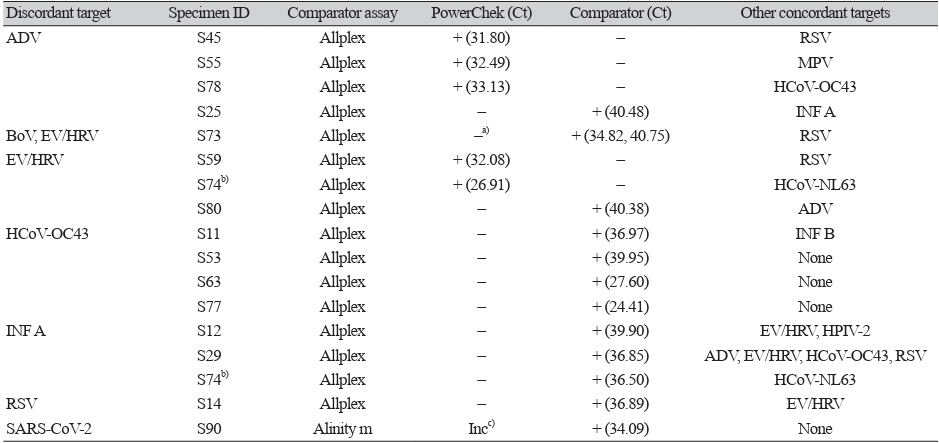
In total, 17 instances of discordance between the two assays were observed in 15 specimens (two specimens showed discordance for two targets) (Table 2). Among these 15 specimens, 12 (80.0%) were identified as polyviral by at least one of the two assays. Five discordant detections (3 for ADV and 2 for EV/ HRV) were PowerChek positive and Allplex negative, representing potential false-positive findings relative to the comparator assay. By contrast, the remaining discordant detections (1 for ADV, 1 for BoV and EV/ HRV, 1 for EV/HRV, 4 for HCoV-OC43, 3 for INF A, and 1 for RSV) were PowerChek negative and Allplex positive, representing potential false-negative findings relative to the comparator assay. The discordant detections were frequently associated with Ct values close to the respective assay cutoffs, suggesting a low viral load. Additionally, the PowerChek assay enabled the simultaneous detection of respiratory viruses and SARS-CoV-2, identifying the latter in four specimens. SARS-CoV-2 is not included in the Allplex Respiratory Panel target list.
Table 2. Specimens showing discordant results between the PowerChek Respiratory Virus Panels 1–4 assay and two comparator assays
| Discordant target | Specimen ID | Comparator assay | PowerChek (Ct) | Comparator (Ct) | Other concordant targets |
|---|---|---|---|---|---|
| ADV | S45 | Allplex | + (31.80) | – | RSV |
| S55 | Allplex | + (32.49) | – | MPV | |
| S78 | Allplex | + (33.13) | – | HCoV-OC43 | |
| S25 | Allplex | – | + (40.48) | INF A | |
| BoV, EV/HRV | S73 | Allplex | –a) | + (34.82, 40.75) | RSV |
| EV/HRV | S59 | Allplex | + (32.08) | – | RSV |
| S74b) | Allplex | + (26.91) | – | HCoV-NL63 | |
| S80 | Allplex | – | + (40.38) | ADV | |
| HCoV-OC43 | S11 | Allplex | – | + (36.97) | INF B |
| S53 | Allplex | – | + (39.95) | None | |
| S63 | Allplex | – | + (27.60) | None | |
| S77 | Allplex | – | + (24.41) | None | |
| INF A | S12 | Allplex | – | + (39.90) | EV/HRV, HPIV-2 |
| S29 | Allplex | – | + (36.85) | ADV, EV/HRV, HCoV-OC43, RSV | |
| S74b) | Allplex | – | + (36.50) | HCoV-NL63 | |
| RSV | S14 | Allplex | – | + (36.89) | EV/HRV |
| SARS-CoV-2 | S90 | Alinity m | Incc) | + (34.09) | None |
A plus sign (+) indicates a positive result (target detected), whereas a minus sign (–) indicates a negative result (target not detected). Ct values are provided for discordant targets only. For S73, in which more than one discordant viral target was identified, both Ct values are listed in the cell, separated by a comma.
a)EV/HRV (Ct, 34.71) was detected in the PowerChek assay despite a negative (–) result.
b)Both assays detected HCoV-NL63; PowerChek also detected EV/HRV, whereas Allplex detected INF A.
c)PowerChek was inconclusive for SARS-CoV-2 (N gene: Ct, 30.92; ORF1ab gene: Ct, 34.15).
Abbreviations: Ct, cycle threshold; ADV, adenovirus; RSV, respiratory syncytial virus; MPV, human metapneumovirus; HCoV-OC43, human coronavirus OC43; INF, influenza virus; BoV, human bocavirus; EV/HRV, enterovirus/human rhinovirus; HPIV, human parainfluenza virus; Inc, inconclusive; ORF, open reading frame; SARS-CoV-2, severe acute respiratory syndrome coronavirus 2.
In total, 49 specimens tested with the Alinity m SARS-CoV-2 assay (20 positive and 29 negative) were retested using the PowerChek assay. The specimens were obtained from patients with a median age of 66 years (range, 0–94 years), of whom 28 (57.1%) were males and 21 (42.9%) were females. Most specimens were submitted from inpatient wards (79.6%), with the remainder being from emergency departments and intensive care units. The specimen types included 47 nasopharyngeal swabs (95.9%) and 2 bronchoalveolar lavage samples (4.1%). The specimen-level OPA between the two assays was 98.0%, with a PPA of 95.0% and an NPA of 100%. Cohen’s kappa coefficient was 0.96 (Table 1). Discordant detection occurred for one specimen only, for which the PowerChek assay yielded an inconclusive result whereas the Alinity assay yielded a positive one. The PowerChek assay detected the SARS-CoV-2 N gene but not the ORF1ab gene (Ct > cutoff for the latter). Although repeated analyses were performed according to the manufacturer’s instructions, the results remained inconclusive. Additionally, the PowerChek assay detected other respiratory viruses not targeted by the Alinity assay, identifying EV/HRV, HCoV-NL63, and RSV in six specimens (Supplementary Table 3).
High agreement was observed between the PowerChek Respiratory Virus Panels 1–4 assay and each of the two established comparator assays in their detection of respiratory viruses in routine clinical samples, with the specimen-level agreements reaching 96.3% for common respiratory viruses (vs. Allplex) and 98.0% for SARS-CoV-2 (vs. Alinity). Discordant detections were rare and largely occurred in polyviral specimens and/or near assay Ct cutoffs, which was consistent with low viral loads. The inclusion of SARS-CoV-2 in PowerChek and the broad coverage of the assay support its use for high-throughput testing.
The observed agreement of the PowerChek assay with the comparator assays during the 2023–2024 winter season was consistent with the findings from previous studies conducted over extended periods; namely, the study from November 2018 to December 2023 [14], which evaluated agreement with the Allplex assay, and the study during the 2023–2024 season [15], which compared PowerChek with both the Allplex and BioFire FilmArray Respiratory 2.1plus Panel assays (FilmArray RP2.1plus; BioFire Diagnostics). Taken together, these findings indicate stable assay performance across diverse epidemiological contexts. High agreement was observed for major winter respiratory viruses, including INF B, MPV, and RSV, with Cohen’s kappa coefficients ranging from 0.97 to 1.00. Additionally, the PowerChek assay yielded high NPA values (96.0%–100.0%). In the absence of an independent reference standard, these findings indicate a negative agreement rather than definitive specificity estimates.
The most discordant results occurred in the polyviral specimens and were frequently associated with Ct values near the assay cutoffs, suggesting low viral loads. Accordingly, the lower PPA values observed for certain viruses, such as HCoV-OC43 and INF A, should be interpreted with caution owing to the limited number of positive specimens, as reflected by the wide confidence intervals. Furthermore, several specimens in which HCoV-OC43 was detected only by the Allplex assay may represent infections caused by human coronavirus HKU1 (HCoV-HKU1) rather than true HCoV-OC43 infections. Since the identification of HCoV-HKU1 in 2005 [16], one study has reported its misclassification as HCoV-OC43 by the Allplex assay, which was attributed to sequence homology and the assay design [17]. According to recent studies, approximately 20% of specimens that tested positive for HCoV-OC43 in the Allplex assay were subsequently confirmed to be HCoV-HKU1 [14,18]. In the present study, three specimens were PowerChek negative but Allplex positive for INF A, and the corresponding Allplex Ct values were high (36.50, 36.85, and 39.90 for specimens S74, S29, and S12, respectively), suggesting low viral loads near the assay detection limit. Given that a previous study reported 100% PPA between the two assays for detecting INF A [14], these discordances are more likely attributable to specimen-specific factors rather than systematic assay failure. The limited number of specimens positive for certain low-prevalence targets (including BoV and specific HPIV subtypes) is consistent with regional surveillance data showing low circulation of these viruses during the winter season of 2023–2024.
This study also demonstrated that the performance of the PowerChek assay was comparable to that of the Alinity assay in detecting SARS-CoV-2 specifically. The two assays showed near-perfect agreement, and only one discordant specimen displayed an inconclusive result in the PowerChek assay and a positive result in the Alinity assay. In this specimen, only the N gene was detected (Ct > cutoff for the ORF1ab gene), suggesting a viral load near the limit of detection, which likely contributed to the inconclusive result. Under such conditions, differences in the assay design, including target selection, may contribute to discordant results. Unlike the PowerChek assay, the Alinity assay targets the RNA-dependent RNA polymerase and N genes of SARS-CoV-2. A previous study has indicated that differences in primer and probe design may lead to non-uniform performance among different assays [19].
In addition to showing performance comparable to that of other widely used assays, the PowerChek assay offers several practical advantages for routine clinical use. In particular, the inclusion of SARS-CoV-2 within a multiplex respiratory virus panel is valuable in the post–COVID-19 era, as the seasonality of respiratory viruses has become less predictable. Moreover, co-infections between SARS-CoV-2 and other respiratory viruses have been reported more frequently, and the detection of other respiratory viruses does not preclude a concomitant SARS-CoV-2 infection [9,12]. The PowerChek assay enables the simultaneous detection of SARS-CoV-2 and other respiratory viruses. In the present study, it identified SARS-CoV-2 and additional respiratory viruses that were outside the target lists of the Allplex and Alinity assays. This broader target coverage may reduce the need for additional testing in routine clinical practice. Despite these advantages, the PowerChek assay includes fewer gene targets than those in the Allplex assay (Supplementary Table 1) and does not provide INF A subtype differentiation (H1, H1N1-pdm09, H3) or RSV A/B typing. Additionally, whereas EV and HRV are detected separately by the Allplex assay, both viruses are reported as a combined target (EV/HRV) in the PowerChek assay, which limits subtype- or species-level information for certain viruses. From an operational perspective, FilmArray RP2.1plus offers a shorter turnaround time for single on-demand testing, whereas the PowerChek assay is optimized for batch processing in centralized laboratories. Because the PowerChek assay requires nucleic acid extraction and a batch-based workflow, the turnaround time depends on batching and laboratory scheduling. Nevertheless, a previous study has suggested that for testing three or more specimens, this assay can be more efficient in terms of overall turnaround time and cost [15]. These differences in workflow should be considered when selecting platforms for emergency single-sample testing versus routine high-throughput testing. Collectively, these characteristics support the suitability of the PowerChek assay for the comprehensive detection of respiratory viruses, including SARS-CoV-2, in routine diagnostic and surveillance settings that require high-throughput testing.
This study has several limitations. First, the limited number of specimens for low-prevalence targets (including BoV and HPIV-1–3) and the absence of HPIV-4- and HCoV-229E-positive specimens restricted the performance evaluation for these viruses. Second, because all assays compared in this study were based on real-time PCR, no independent reference standard was available to determine their true diagnostic sensitivity or specificity. Moreover, discordant results could not be resolved using a third method (e.g., additional rRT-PCR or sequencing) because of the limited residual specimen volume, and a medical record review was not performed as it was beyond the scope approved by the Institutional Review Board. Therefore, the reported performance metrics should be interpreted as inter-assay agreements rather than as definitive diagnostic accuracy.
In summary, the performance of the PowerChek assay was shown to be comparable to those of the Allplex and Alinity assays. The PowerChek assay is a practical option for the comprehensive detection of respiratory viruses (including SARS-CoV-2) in clinical laboratories that require high-throughput batch testing in the post-COVID-19 era.
The following supplementary materials are available on the journal’s website:
The Institutional Review Board of Seoul National University Hospital, Seoul, Korea approved this study (D-2402-103-1513). The requirement for informed consent was waived owing to the retrospective nature of the study.
Jae Hyeon Park serves on the advisory board of Kogene Biotech. Moon-Woo Seong received research funding from Kogene Biotech for the conduct of this study. The remaining authors declare no competing interests.
This study was supported by a clinical research fund from Kogene Biotech.
The datasets generated in this study are available from the corresponding authors upon request.
We acknowledge in-kind support from Kogene Biotech in the form of the PowerChek test kits. The sponsor had no role in the conduct of the study or preparation of the manuscript.
1. Falsey AR and Walsh EE. Respiratory syncytial virus infection in elderly adults. Drugs Aging 2005;22:577–87.

2. Ison MG. Respiratory viral infections in transplant recipients. Antivir Ther 2007;12:627–38.

3. Ramanan P, Bryson AL, Binnicker MJ, Pritt BS, Patel R. Syndromic panel-based testing in clinical microbiology. Clin Microbiol Rev 2018;31:e00024-17.

4. Charlton CL, Babady E, Ginocchio CC, Hatchette TF, Jerris RC, Li Y, et al. Practical guidance for clinical microbiology laboratories: viruses causing acute respiratory tract infections. Clin Microbiol Rev 2019;32:e00042-18.

5. Ginocchio CC and McAdam AJ. Current best practices for respiratory virus testing. J Clin Microbiol 2011;49:S44–8.

6. El-Haddad K, Liu W, Burke P, Wang H, Esper FP. Changes to endemic respiratory virus circulation and testing before, during, and after the COVID-19 pandemic. Open Forum Infect Dis 2025;12:ofaf493.

7. Chow EJ, Uyeki TM, Chu HY. The effects of the COVID-19 pandemic on community respiratory virus activity. Nature Rev Microbiol 2023;21:195–210.

8. Tang JW, Bialasiewicz S, Dwyer DE, Dilcher M, Tellier R, Taylor J, et al. Where have all the viruses gone? Disappearance of seasonal respiratory viruses during the COVID-19 pandemic. J Med Virol 2021;93:4099–101.

9. Olsen SJ, Winn AK, Budd AP, Prill MM, Steel J, Midgley CM, et al. Changes in influenza and other respiratory virus activity during the COVID-19 pandemic – United States, 2020–2021. MMWR Morb Mortal Wkly Rep 2021;70:1013–9.

10. Agha R and Avner JR. Delayed seasonal RSV surge observed during the COVID-19 pandemic. Pediatrics 2021;148:e2021052089.

11. Siordia JA. Epidemiology and clinical features of COVID-19: a review of current literature. J Clin Virol 2020;127:104357.

12. Kim D, Quinn J, Pinsky B, Shah NH, Brown I. Rates of co-infection between SARS-CoV-2 and other respiratory pathogens. JAMA 2020;323:2085–6.

13. Swets MC, Russell CD, Harrison EM, Docherty AB, Lone N, Girvan M, et al. SARS-CoV-2 co-infection with influenza viruses, respiratory syncytial virus, or adenoviruses. Lancet 2022;399:1463–4.

14. Kim J, Han E, Kim J, Kim YJ, Bae MH. Comparative evaluation of the PowerChek Respiratory Virus Panel RT-PCR assay detecting 16 respiratory viruses including SARSCoV-2. J Med Virol 2025;97:e70243.

15. Lee H, Akter R, Lee JH, Ryu SW. Evaluation of the PowerChek™ Respiratory Virus Panel 1/2/3/4 for the detection of 16 respiratory viruses: a comparative study with the Allplex™ Respiratory Panel assay 1/2/3 and BioFire® Respiratory Panel 2.1 plus. Diagnostics (Basel) 2025;15:2713.

16. Woo PC, Lau SK, Chu CM, Chan KH, Tsoi HW, Huang Y, et al. Characterization and complete genome sequence of a novel coronavirus, coronavirus HKU1, from patients with pneumonia. J Virol 2005;79:884–95.

17. Concato C, Piccioni L, Ranno S, Antonelli F, Buonomini A, Coltella L, et al. Comparison of the AllplexTM Respiratory Panel Assays and the automated Fast Track Diagnostics Respiratory pathogens 21 assay for the diagnosis of pediatric respiratory viral infections. Arch Virol 2020;165:1191–6.

18. Kim J, Han E, Kim J, Kim YJ, Bae MH. Misidentification of human coronavirus HKU1 as OC43 by the Seegene Allplex Respiratory Panel Real-time PCR Assay. Ann Lab Med 2025;45:545–8.

19. Wang R, Hozumi Y, Yin C, Wei GW. Mutations on COVID-19 diagnostic targets. Genomics 2020;112:5204–13.
1. Falsey AR and Walsh EE. Respiratory syncytial virus infection in elderly adults. Drugs Aging 2005;22:577–87.

2. Ison MG. Respiratory viral infections in transplant recipients. Antivir Ther 2007;12:627–38.

3. Ramanan P, Bryson AL, Binnicker MJ, Pritt BS, Patel R. Syndromic panel-based testing in clinical microbiology. Clin Microbiol Rev 2018;31:e00024-17.

4. Charlton CL, Babady E, Ginocchio CC, Hatchette TF, Jerris RC, Li Y, et al. Practical guidance for clinical microbiology laboratories: viruses causing acute respiratory tract infections. Clin Microbiol Rev 2019;32:e00042-18.

5. Ginocchio CC and McAdam AJ. Current best practices for respiratory virus testing. J Clin Microbiol 2011;49:S44–8.

6. El-Haddad K, Liu W, Burke P, Wang H, Esper FP. Changes to endemic respiratory virus circulation and testing before, during, and after the COVID-19 pandemic. Open Forum Infect Dis 2025;12:ofaf493.

7. Chow EJ, Uyeki TM, Chu HY. The effects of the COVID-19 pandemic on community respiratory virus activity. Nature Rev Microbiol 2023;21:195–210.

8. Tang JW, Bialasiewicz S, Dwyer DE, Dilcher M, Tellier R, Taylor J, et al. Where have all the viruses gone? Disappearance of seasonal respiratory viruses during the COVID-19 pandemic. J Med Virol 2021;93:4099–101.

9. Olsen SJ, Winn AK, Budd AP, Prill MM, Steel J, Midgley CM, et al. Changes in influenza and other respiratory virus activity during the COVID-19 pandemic – United States, 2020–2021. MMWR Morb Mortal Wkly Rep 2021;70:1013–9.

10. Agha R and Avner JR. Delayed seasonal RSV surge observed during the COVID-19 pandemic. Pediatrics 2021;148:e2021052089.

11. Siordia JA. Epidemiology and clinical features of COVID-19: a review of current literature. J Clin Virol 2020;127:104357.

12. Kim D, Quinn J, Pinsky B, Shah NH, Brown I. Rates of co-infection between SARS-CoV-2 and other respiratory pathogens. JAMA 2020;323:2085–6.

13. Swets MC, Russell CD, Harrison EM, Docherty AB, Lone N, Girvan M, et al. SARS-CoV-2 co-infection with influenza viruses, respiratory syncytial virus, or adenoviruses. Lancet 2022;399:1463–4.

14. Kim J, Han E, Kim J, Kim YJ, Bae MH. Comparative evaluation of the PowerChek Respiratory Virus Panel RT-PCR assay detecting 16 respiratory viruses including SARSCoV-2. J Med Virol 2025;97:e70243.

15. Lee H, Akter R, Lee JH, Ryu SW. Evaluation of the PowerChek™ Respiratory Virus Panel 1/2/3/4 for the detection of 16 respiratory viruses: a comparative study with the Allplex™ Respiratory Panel assay 1/2/3 and BioFire® Respiratory Panel 2.1 plus. Diagnostics (Basel) 2025;15:2713.

16. Woo PC, Lau SK, Chu CM, Chan KH, Tsoi HW, Huang Y, et al. Characterization and complete genome sequence of a novel coronavirus, coronavirus HKU1, from patients with pneumonia. J Virol 2005;79:884–95.

17. Concato C, Piccioni L, Ranno S, Antonelli F, Buonomini A, Coltella L, et al. Comparison of the AllplexTM Respiratory Panel Assays and the automated Fast Track Diagnostics Respiratory pathogens 21 assay for the diagnosis of pediatric respiratory viral infections. Arch Virol 2020;165:1191–6.

18. Kim J, Han E, Kim J, Kim YJ, Bae MH. Misidentification of human coronavirus HKU1 as OC43 by the Seegene Allplex Respiratory Panel Real-time PCR Assay. Ann Lab Med 2025;45:545–8.

19. Wang R, Hozumi Y, Yin C, Wei GW. Mutations on COVID-19 diagnostic targets. Genomics 2020;112:5204–13.
